







COB LED Screen vs SMD: Which LED Display Technology Is Better for Your Project?
COB led screen vs SMD: Why Buyers Compare These Two Technologies
The search term COB led screen vs SMD has become increasingly important as LED displays move toward smaller pixel pitches, higher resolutions, closer viewing distances, and more demanding professional applications.
For many years, SMD has been one of the mainstream packaging technologies in LED displays. It is mature, versatile, and used across a very wide range of indoor and outdoor applications.
COB, or Chip on Board, has gained importance as fine-pitch and micro-pitch led video walls become more common. Instead of using individually packaged lamp devices, COB mounts the LED chips directly onto the PCB and protects them with an integrated encapsulation layer. LEDLINO describes this structure as particularly valuable for fine-pitch indoor displays where close-viewing clarity, surface protection, high contrast, and stable operation matter.
The question is therefore not simply whether COB is “newer” than SMD. The real question is:
Which technology fits the viewing distance, pixel pitch, budget, application, maintenance strategy, and performance requirements of the project?
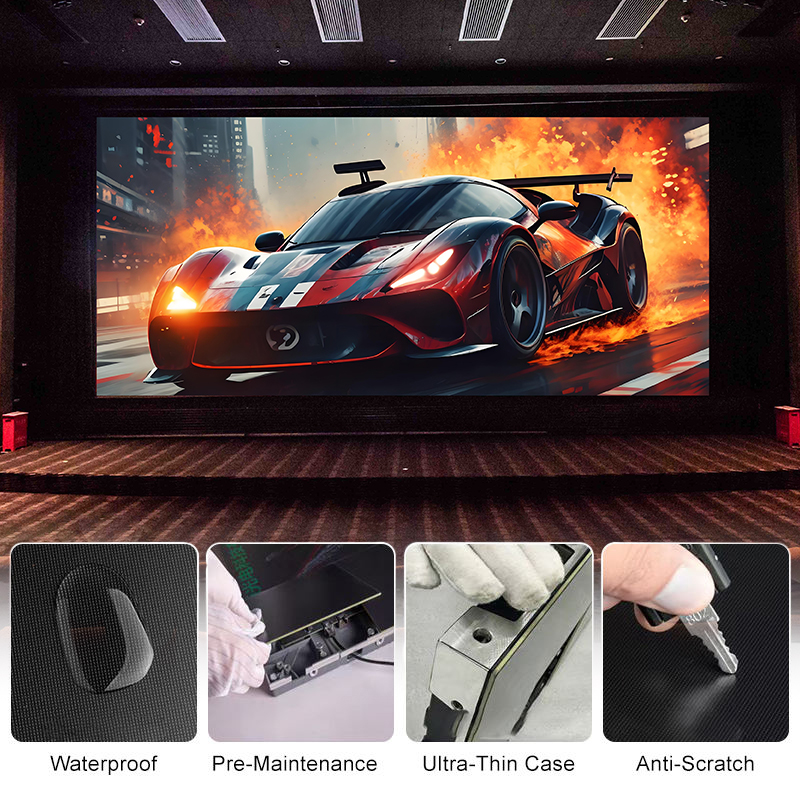
What Is a COB led screen?
COB stands for Chip on Board.
In a COB LED display, bare LED chips are mounted directly onto the PCB. The light-emitting area is then protected with an integrated encapsulation layer.
This differs from conventional SMD packaging, where LED chips are first assembled into individual packages before those packages are mounted onto the PCB.
LEDLINO’s 4K conference room article explains that COB’s direct-chip structure creates a smoother, better-protected surface and supports fine-pitch displays where high pixel density and close-viewing performance are important.
Typical COB applications include:
- P0.9–P1.x ultra-fine-pitch video walls
- Conference rooms
- Command centers
- Control rooms
- Corporate presentation spaces
- Studios
- High-end commercial environments
LEDLINO’s P1.86 COB installation case highlights seamless presentation, close-viewing clarity, high contrast, wide viewing angle, stable playback, clean installation, and convenient maintenance as key advantages in professional indoor projects.
COB vs SMD: Packaging Structure
The fundamental difference is how the LED chips are packaged.
COB
LED chip → PCB → integrated encapsulation
The LED chip is mounted directly onto the board.
SMD
LED chip → individual LED package → PCB
The chip is first packaged as an individual device and then mounted onto the circuit board.
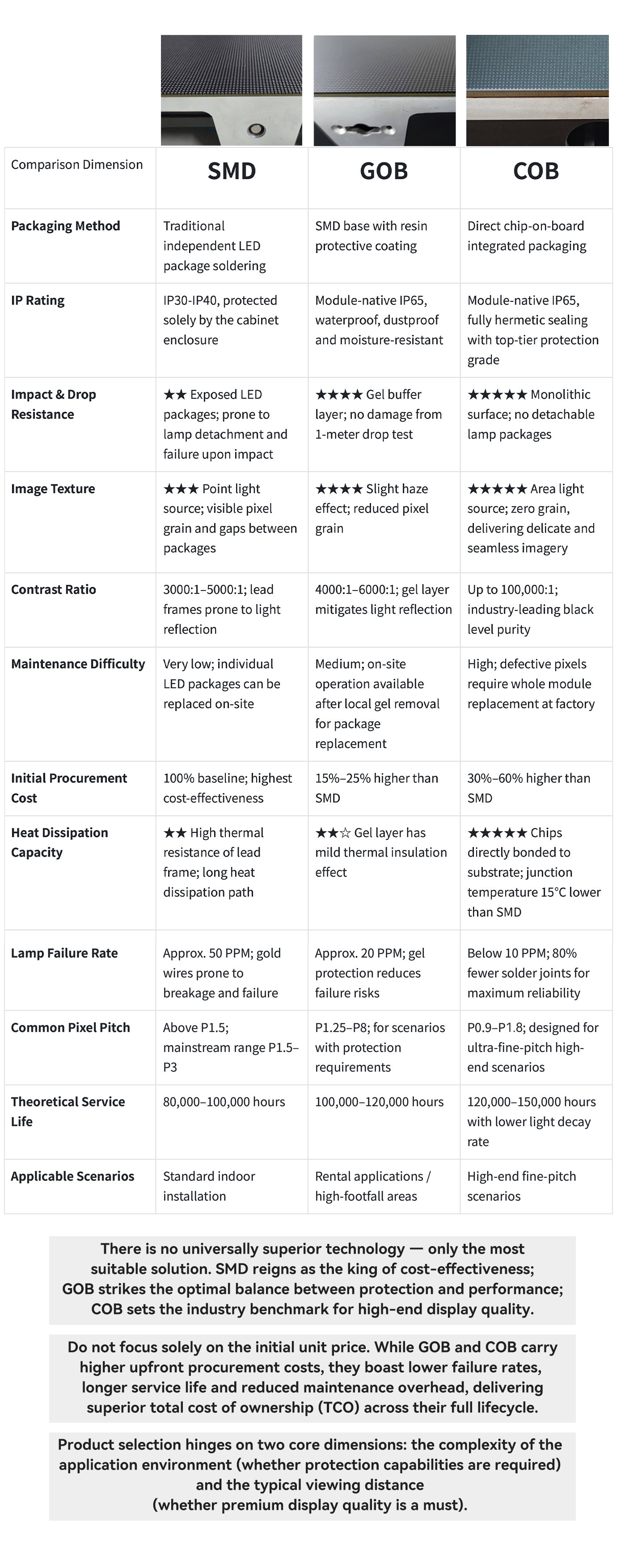
This difference influences several other characteristics, including pixel density, surface durability, contrast, maintenance, manufacturing difficulty, and price.
LEDLINO’s COB heat-dissipation article confirms this structural distinction, explaining that COB mounts chips directly onto the PCB while traditional SMD uses individually packaged lamp beads mounted afterward.
COB vs SMD: Surface Protection
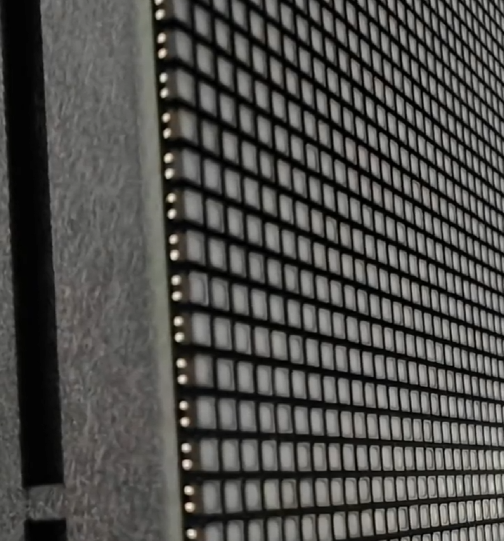
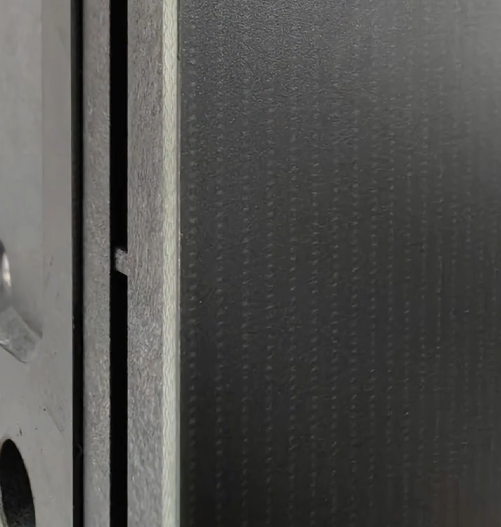
One of the clearest advantages of COB is surface protection.
Because COB uses an integrated encapsulation layer, the chips are not exposed in the same way as conventional SMD lamp packages.
This can improve resistance to:
- Accidental touch
- Minor impact
- Dust
- Moisture
- Cleaning
- Handling damage
This advantage becomes more important as pixel pitch decreases. Fine-pitch SMD lamps are physically small and densely arranged, so the individual packages can be more vulnerable during handling.
LEDLINO describes COB’s integrated surface protection as an important benefit for conference rooms and close-viewing indoor displays that may be used and cleaned frequently.
Advantage: COB
For high-touch or premium fine-pitch installations, COB generally provides the more protected display surface.
COB vs SMD: Pixel Pitch
Pixel pitch is another major difference.
Both technologies can support relatively small pitches, but COB is particularly well suited to fine-pitch and micro-pitch development because the LED chips are mounted directly on the PCB without the physical package dimensions associated with conventional SMD.
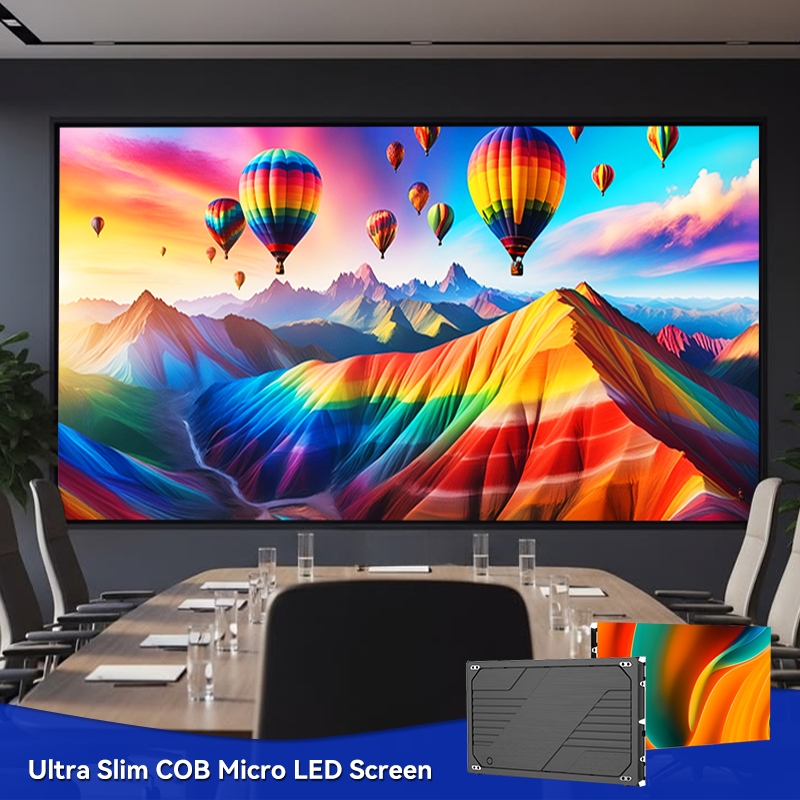
LEDLINO positions COB as a key technology for fine-pitch and ultra-fine-pitch Indoor Led Video Walls. Its current product categories include dedicatedIndoor COB Fine Pitch Led Video Wall and Ultra Slim Cob Micro Led Screen lines.
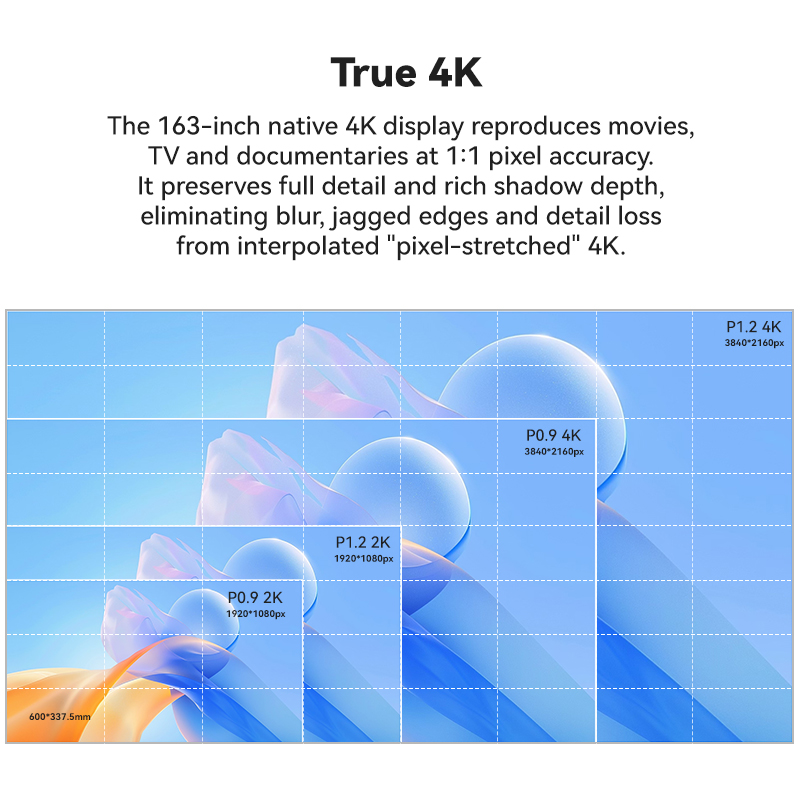
Smaller pixel pitches allow more pixels within the same screen size, which helps achieve higher resolutions such as 2K and 4K from shorter viewing distances.
COB is especially suitable for:
- P0.x applications
- P1.25
- P1.5-class displays
- Premium P1.86 projects
- Compact 4K LED video walls
SMD is widely used for:
- P1.x conventional fine pitch
- P2
- P2.5
- P3
- P3.91
- P4 and larger pitches
- Indoor and outdoor commercial displays
The practical choice depends on resolution targets, screen dimensions, viewing distance, and budget.