




LED Dance Floor Manufacturer: How to Choose a Reliable Supplier for Interactive Floor Display Projects
LED Dance Floor Manufacturer: Why Supplier Selection Matters
The keyword LED Dance Floor manufacturer has strong commercial intent. Buyers searching this phrase are usually planning a real project for a wedding hall, nightclub, stage, entertainment venue, shopping mall, exhibition, immersive experience center or brand event.
An LED Dance Floor is very different from a conventional LED wall. People walk, dance and sometimes place equipment directly on the screen surface. This means the product must combine visual performance with mechanical strength, anti-slip protection, heat management and reliable structural design.
LEDLINO’s product portfolio includes interactive floor tile displays as a dedicated product category, while its dance-floor supplier page specifically positions Led Screen Dance Floors for event applications and ODM customization.
For buyers, this means choosing the manufacturer is just as important as choosing the pixel pitch. A reliable supplier must understand both display technology and the physical demands of a floor installation.
Wht Is an LED Dance Floor?
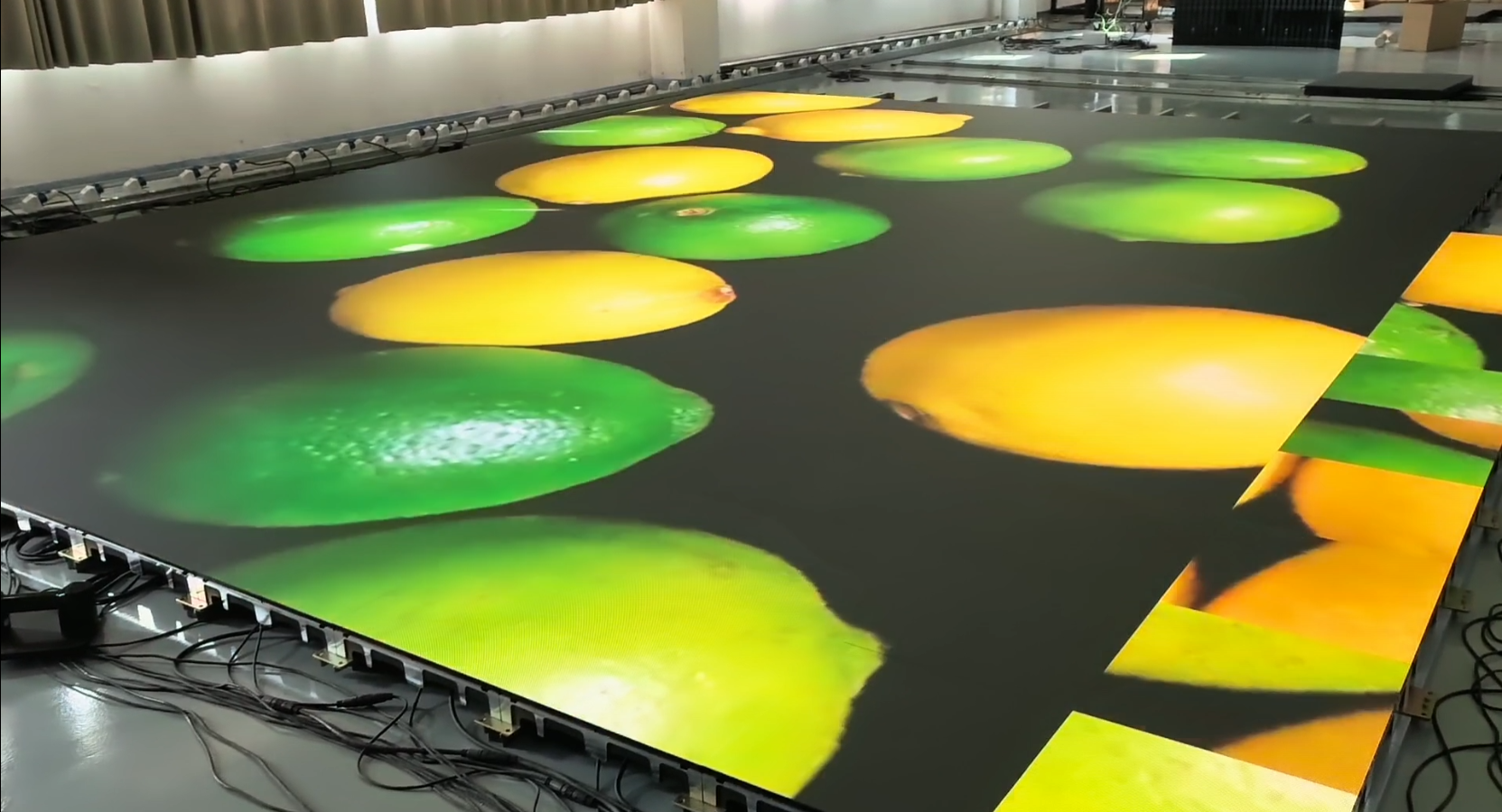
An LED Dance Floor is a load-bearing LED display installed horizontally so people can walk or dance directly on the screen.
Instead of using a conventional decorative floor, the venue gains a programmable digital surface capable of displaying:
- Animated patterns
- Brand graphics
- Wedding visuals
- Music-reactive effects
- Interactive footprints
- Water-ripple effects
- Geometric animations
- Promotional content
- Event themes
- Immersive floor-wall visuals
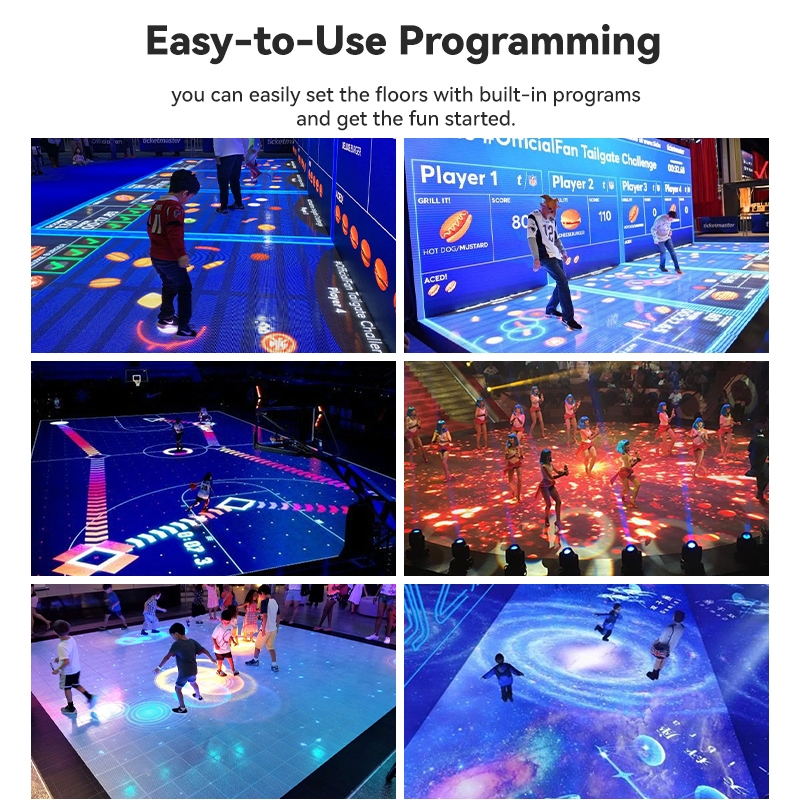
LEDLINO describes LED floor screens as load-bearing and interactive ground-display devices that can turn the floor into part of the visual experience rather than leaving it as a static surface.
This makes LED Dance Floors suitable for both entertainment and commercial display projects.
Why LED Dance Floors Are Becoming More Popular
Modern entertainment venues compete on experience, not just decoration.
A traditional dance floor has a fixed appearance. An LED dance floor can change instantly according to the event, music, brand or audience.
A wedding can use romantic floral visuals. A nightclub can display high-energy animated patterns. A brand launch can cover the floor with logos and campaign content. An immersive venue can connect the floor with surrounding LED walls to create a complete digital environment.
LEDLINO’s 50㎡ P3.91 floor screen installation case combines an interactive LED floor with a curved LED video wall, demonstrating how floor and wall displays can work together to create a more immersive commercial space.
This flexibility is one of the biggest reasons LED dance floors are becoming attractive to event companies and venue operators.
Key Factor 1: Load-Bearing Capacity
Load-bearing performance is one of the most important specifications of an LED dance floor.
Unlike a wall-mounted LED display, the floor must support people, furniture, stage equipment and repeated movement. The structure must remain stable without damaging LED modules underneath.
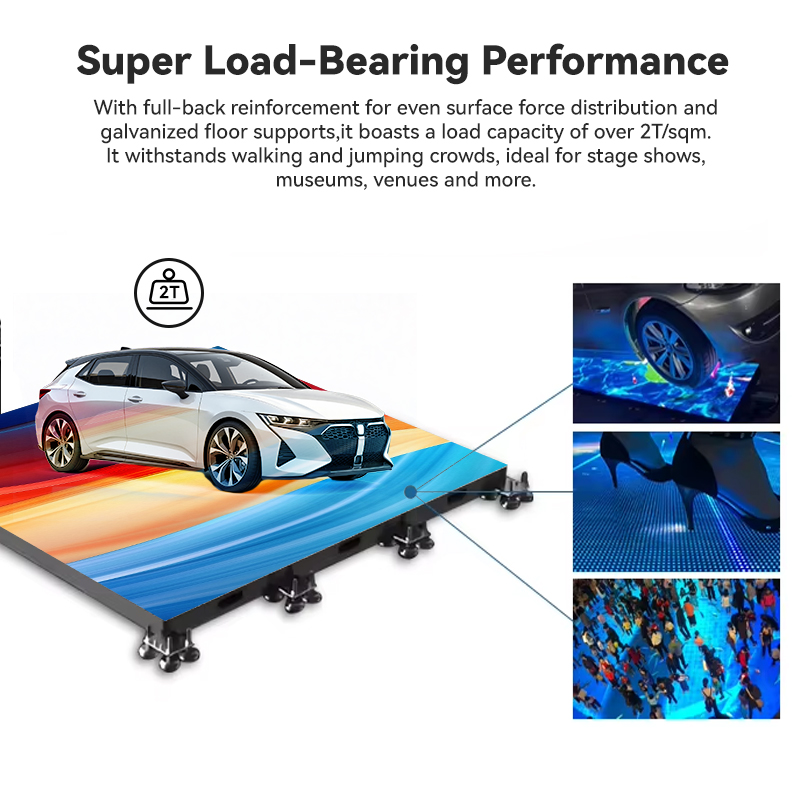
LEDLINO’s interactive floor tile product specifies a load-bearing capacity of approximately 1.5 to 2 tons per square meter, even noting that vehicles can be placed on the surface in suitable configurations.
For dance floor projects, this level of structural strength helps protect the display during:
- Dancing
- High foot traffic
- Equipment movement
- Event setup
- Repeated installation
- Long-term venue operation
A professional manufacturer should be able to explain the floor’s rated load and the testing method behind it.
Key Factor 2: Anti-Slip and Wear-Resistant Surface
Safety is critical for a floor display.
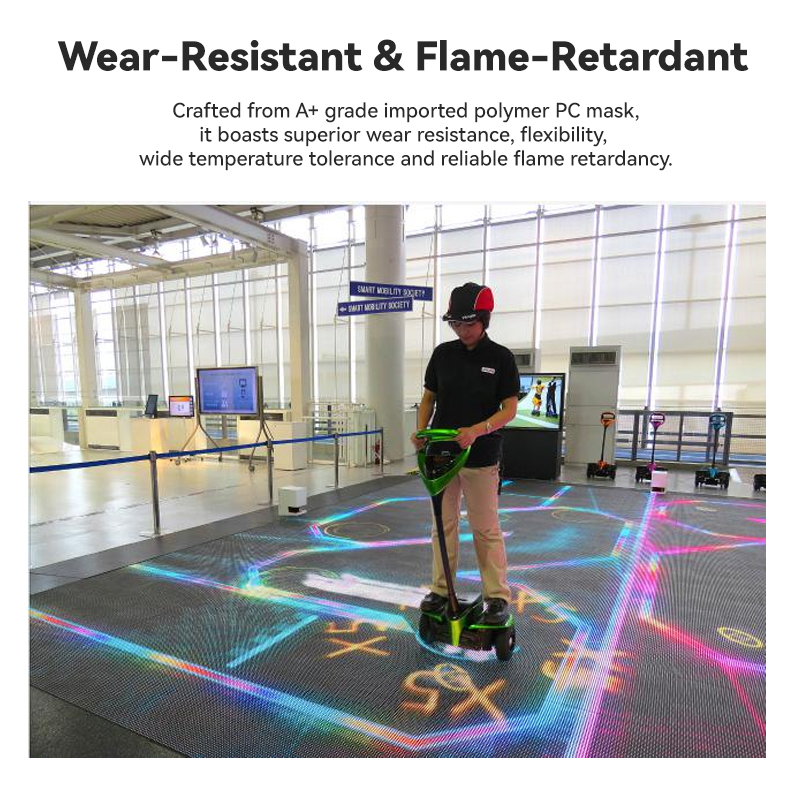
A visually impressive screen is not useful if the surface becomes slippery or wears quickly under repeated use. Dance floors face shoes, high heels, rolling equipment, dust and frequent cleaning.
LEDLINO’s P3.91 interactive floor installation case highlights anti-slip and wear-resistant surface design as a key product feature.
Its 146㎡ P3.91 indoor floor tile screen project also emphasizes strong load-bearing structure, anti-slip surface, stable playback and immersive integration.
For wedding venues, nightclubs and entertainment centers, this is particularly important because the screen is used directly by guests.
Key Factor 3: Interactive Sensing
An LED dance floor can do more than play video.
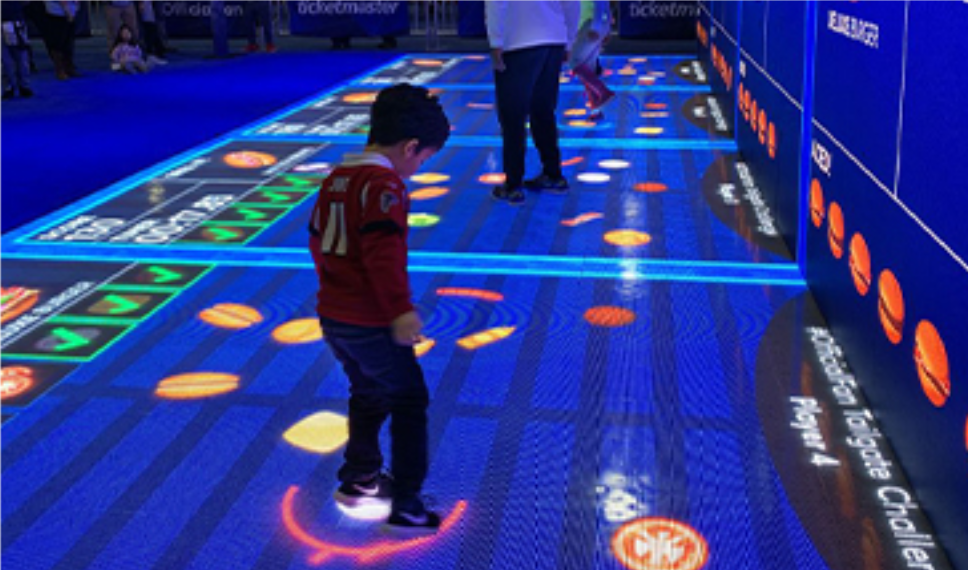
With interactive sensing, the floor can respond to movement in real time. When a person walks or dances across the screen, visual effects can follow their position.
LEDLINO’s interactive floor tile product states that infrared sensors can track people’s movements and trigger interactive effects.
This can create effects such as:
- Footstep tracking
- Light trails
- Water ripples
- Particle explosions
- Interactive games
- Moving graphics
- Floor-wall synchronized effects
For entertainment venues, interactive sensing transforms the audience from passive viewers into participants.
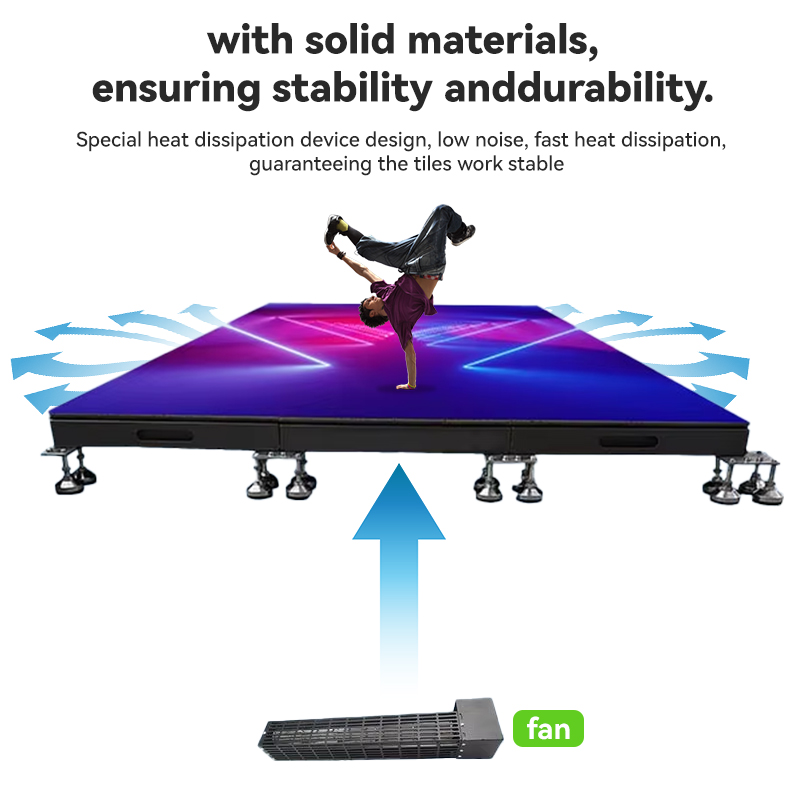
Key Factor 4: Heat Dissipation
Heat management is especially important in floor displays because the screen is installed horizontally and may have less natural airflow than a vertical LED wall.
LEDLINO’s interactive floor tile product specifically highlights a rapid heat dissipation design intended to reduce screen temperature and support longer-term stable operation.
Good thermal design can help protect:
- LED modules
- Driver ICs
- Power supplies
- Control electronics
- Internal connections
A professional LED dance floor manufacturer should consider heat dissipation as part of the complete floor structure, not as an afterthought.