




LED Display for Control Room: How to Choose a Reliable 24/7 Video Wall for Monitoring and Command Centers
Product Name
LED Display for Control Room / Fine Pitch Led Video Wall for Command Centers
Display Type
Indoor Fixed LED Video Wall / COB Fine Pitch LED Display / SMD or Gob Indoor Led Screen
Available Pixel Pitch
-
P1.25
-
P1.53
-
P1.86
-
P2
-
P2.5
Reference Product Specifications
The following specifications are based on LEDLINO's indoor fixed-installation and Fine-Pitch Led Display product range.
| Parameter | Published Product Options |
|---|---|
| Pixel Pitch | P1.25 / P1.53 / P1.86 / P2 / P2.5 |
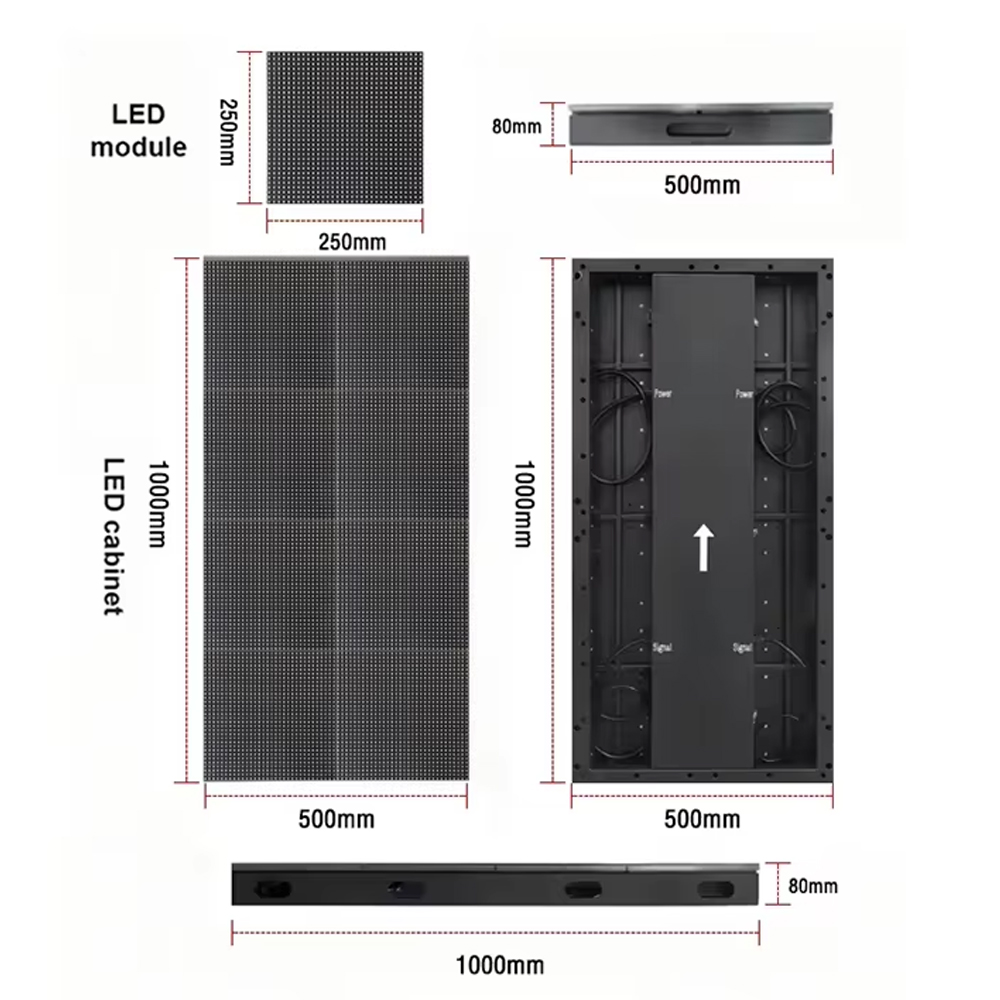
| Cabinet Size | 640 × 480 mm; other formats available |
| Display Technology | SMD / GOB / COB, depending on series |
| Brightness | 600–900 nits on relevant indoor models |
| Refresh Rate | 3840Hz on listed indoor configurations |
| Cabinet Material | Die-cast aluminum options |
| Maintenance | Front-service design; front/rear options on other models |
| Installation | Wall-mounted / embedded / stand-mounted |
| Screen Structure | Seamless modular led video wall |
| Customization | OEM/ODM available |
| Typical Environment | Indoor professional display applications |
Important: These are product-family specifications rather than a universal configuration. Continuous-duty suitability, power redundancy, controller redundancy, exact resolution, and other high-availability requirements must be confirmed for the selected control-room project.
Main Product Features
-
Fine-pitch high-resolution display
-
Seamless large-screen visualization
-
Clear text and data reproduction
-
Support for multi-window monitoring systems
-
High contrast and consistent color performance
-
Wide viewing angle
-
Front-service maintenance
-
Slim cabinet construction
-
COB surface-protection options
-
Flexible screen dimensions
-
Modular replacement and service planning
-
Suitable for continuous-duty system design
-
Custom installation solutions
-
Integration with professional video processors
Main Applications
-
Security monitoring centers
-
Emergency command centers
-
Industrial control rooms
-
Power dispatch centers
-
Traffic management centers
-
Railway operations centers
-
Smart city control rooms
-
Data center network operations centers
-
Airport operations centers
-
Oil and gas monitoring facilities
-
Enterprise security operations centers
-
Public safety command centers
-
Industrial production monitoring rooms
-
Financial trading and monitoring environments
Related Product: LEDLINO P1.53 Fine Pitch Indoor LED Video Wall
News Content
LED Display for Control Room: Why Reliable Visualization Matters
Modern control rooms operate at the center of complex organizations.
From security surveillance and traffic management to industrial production, energy distribution, transportation, and emergency response, operators must monitor large amounts of information and react to changing conditions.
The effectiveness of a control room depends partly on how clearly that information is presented.
A conventional desktop monitor can display detailed data for an individual operator, but large control centers often need a shared visualization platform that gives multiple team members a common understanding of the operational environment.
This is where an LED display for control room becomes valuable.
A professional led video wall can combine camera feeds, GIS maps, industrial dashboards, alarm information, network status, and real-time data across one seamless display surface.
Unlike an ordinary advertising screen, a control-room led wall is primarily designed to support information visibility, situational awareness, and reliable daily operation.
Lino Visino's indoor small-pitch LED display solutions target professional applications including command centers, monitoring rooms, conference facilities, research centers, and other information-intensive environments.
For organizations planning a new monitoring center or upgrading an existing control room, choosing the correct video wall requires careful evaluation of both display hardware and the complete signal-management system.
What Is a Control Room LED Video Wall?
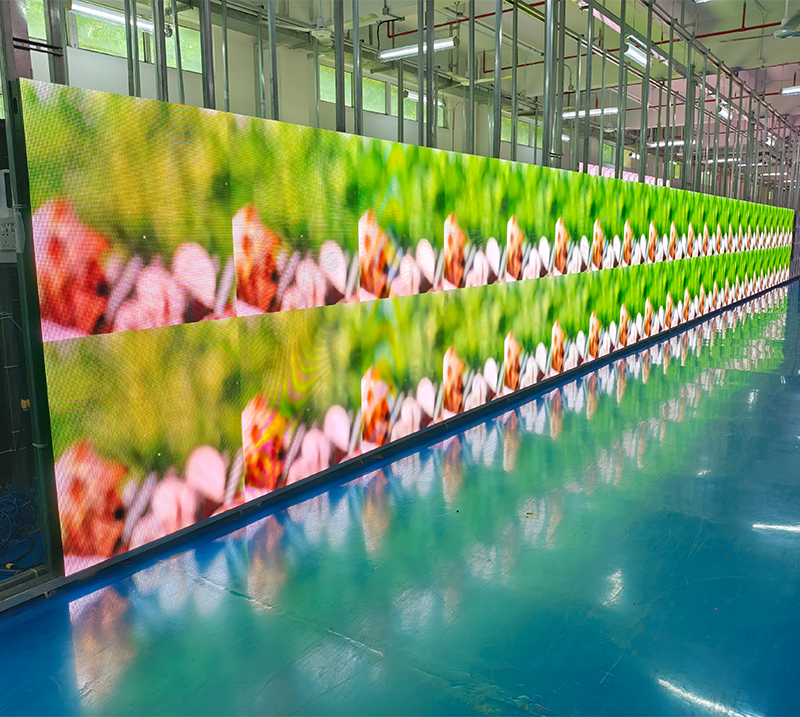
A control room LED video wall is a large-format direct-view LED display built from modular LED panels or cabinets.
The modules form a continuous digital surface that can display multiple sources and information windows.
A complete solution may include:
-
Fine-pitch LED modules
-
LED cabinets
-
Power supplies
-
Sending and receiving systems
-
Video processors
-
Signal distribution equipment
-
Video wall management software
-
Mounting structures
-
Monitoring and maintenance systems
The LED display is only one component of the full control-room visualization platform.
Depending on the project, the system may connect with video management software, building management systems, SCADA platforms, industrial monitoring applications, traffic management software, or other approved operational sources.
The purpose is to present information in a format that operators can understand quickly and accurately.
Why Fine Pitch Matters in Control Rooms
Pixel pitch determines the distance between adjacent LED pixels.
A smaller pixel pitch means higher pixel density.
This is particularly important in control rooms because the display may need to show:
-
Small text
-
Numerical data
-
Equipment status
-
Monitoring dashboards
-
Maps
-
Charts
-
Detailed camera images
-
Network diagrams
-
Alarm messages
An LED wall intended primarily for outdoor advertising does not require the same pixel density as a screen displaying fine operational details.
LEDLINO's Indoor Small-Pitch LED Display Solution emphasizes high-definition images, detailed text edges, stable colors, and professional indoor visualization.
For control-room applications, fine pitch helps improve information clarity, especially when operators work relatively close to the display.
1. How to Choose the Right Pixel Pitch
The correct pixel pitch depends on screen dimensions, viewing distance, resolution requirements, and the smallest information that operators need to read.
LEDLINO's indoor product range includes multiple fine-pitch options.
P1.25 LED Display
P1.25 provides high pixel density for premium control rooms where screen space is limited and fine information detail is required.
It can be considered for compact high-resolution monitoring walls, advanced command rooms, and other close-viewing applications.
P1.53 LED Display
P1.53 offers a balance between image detail, physical screen dimensions, and project cost.
It is suitable for professional monitoring applications that require clear dashboards, small text, maps, and multi-source video presentation.
P1.86 LED Display
P1.86 is a practical fine-pitch option for larger control rooms, monitoring centers, and operations facilities where the audience views the screen from moderate distances.
P2 LED Display
P2 may be appropriate when the screen is larger and the nearest viewing distance allows a slightly lower pixel density.
P2.5 LED Display
P2.5 can be considered for large indoor operations rooms where information is displayed with relatively large text and graphics.
It is less appropriate when extremely fine details must be read from short distances.
Pixel Pitch Comparison
| Pixel Pitch | Typical Project Priority |
|---|---|
| P1.25 | Premium close-viewing detail |
| P1.53 | High-density monitoring dashboards |
| P1.86 | Balanced resolution and cost |
| P2 | Larger operational video walls |
| P2.5 | Longer indoor viewing distances |
A manufacturer should evaluate the actual operator seating positions before recommending a specific pitch.
The smallest available pixel pitch is not automatically the best investment.
2. Native Resolution and Multi-Window Display
Control rooms frequently show multiple information sources simultaneously.
A single video wall may display camera feeds, operational maps, software dashboards, alerts, and live status information.
The screen must have enough native resolution to present that content clearly.
For example, 4K UHD resolution contains:
3840 × 2160 pixels
That is approximately 8.3 million pixels.
However, an LED wall is not automatically 4K because it is physically large or because the video processor accepts a 4K input.
The actual native resolution depends on the total number of LED pixels.
A simple planning relationship is:
Display width in pixels = Physical width ÷ Pixel pitch
Display height in pixels = Physical height ÷ Pixel pitch
For example, a theoretical P1.25 display would require approximately 4.8 meters of width and 2.7 meters of height to achieve a 3840 × 2160 pixel canvas.
Actual dimensions must be adjusted to the available module and cabinet resolution.
Control-room designers should specify the required native pixel count, not simply request a "4K-compatible screen."
3. Seamless Visualization Across the Entire Screen
One of the main advantages of direct-view LED technology is its seamless modular display surface.
Unlike LCD video walls, which have physical panel borders, LED video walls can create a continuous image across adjoining cabinets.
This can be especially valuable when displaying maps, network diagrams, large dashboards, or camera images that extend across multiple display sections.
LEDLINO's fine-pitch indoor product range highlights seamless installation, accurate cabinet alignment, and clear image reproduction.
In professional control rooms, seamless presentation allows operators to view information without visual interruptions caused by LCD panel bezels.
However, LED cabinets still require precise mechanical alignment and calibration.
Poor assembly can create visible cabinet boundaries even when the technology itself is described as seamless.
4. COB vs SMD vs GOB for Control Room Displays
Modern fine-pitch LED walls use different packaging technologies.
The most appropriate choice depends on pixel pitch, image requirements, durability, maintenance strategy, and budget.
COB LED Display
COB stands for Chip on Board.
The LED chips are mounted directly onto the circuit board and protected by an integrated encapsulation layer.
COB can provide advantages in surface protection, fine-pitch manufacturing, and the appearance of the display surface.
These characteristics are particularly relevant to premium control rooms.
LEDLINO's COB product content emphasizes fine-pitch image quality, high contrast, surface protection, convenient maintenance, and professional indoor installation.
SMD LED Display
SMD stands for Surface Mount Device.
It uses individually packaged LED components mounted onto the PCB.
SMD is a mature technology used across many indoor and outdoor display applications.
It can be a cost-effective option for control rooms that do not require the smallest available pixel pitch.
GOB LED Display
GOB stands for Glue on Board.
It generally uses an SMD-based module with an additional protective coating over the display surface.
This can improve resistance to accidental contact and certain environmental factors.
LEDLINO's indoor fixed display range includes GOB-supported configurations.
Technology Comparison
| Feature | COB | SMD | GOB |
|---|---|---|---|
| Packaging | Direct chip mounting | Packaged LED devices | Protected SMD-based module |
| Fine-Pitch Potential | Strong | Broad product availability | Depends on SMD base |
| Surface Protection | Integrated encapsulation | Conventional exposed packages | Added protective layer |
| Maintenance | Product-specific module servicing | Mature component/module servicing | Depends on coating and design |
| Typical Positioning | Premium fine-pitch indoor | General fine-pitch/commercial | Protected indoor display |
A high-quality SMD system can outperform a poorly manufactured COB product.
Control-room buyers should evaluate the complete display system rather than selecting technology solely by packaging terminology.
5. Reliability for 24/7 Control Room Operations
Many control rooms operate continuously.
Security monitoring centers, industrial operations facilities, traffic control rooms, and emergency response systems may need uninterrupted visualization throughout the day and night.
For these environments, reliability becomes one of the most important purchasing criteria.
A continuous-duty system should be evaluated for:
-
Power supply reliability
-
LED module quality
-
Driver IC performance
-
Temperature management
-
Signal stability
-
Monitoring capability
-
Spare part availability
-
Maintenance access
-
Service response procedures
LEDLINO positions its fine-pitch displays for professional environments requiring stable daily operation.
However, continuous 24/7 suitability should be confirmed for the exact product, environmental conditions, and complete system configuration.
A project described as "24/7" should ideally include defined reliability requirements, not merely a marketing label.
6. Redundant Power and Signal Systems
For mission-critical control rooms, system availability may be more important than maximum brightness or the smallest pixel pitch.
A display failure can reduce the amount of information available to operators.
To improve system resilience, some professional projects specify additional redundancy.
Depending on the architecture, this may include:
-
Redundant power supplies
-
Dual signal paths
-
Backup video processors
-
Redundant source connections
-
UPS integration
-
Spare receiving cards
-
On-site replacement modules
These features are system-level design choices.
They should not be assumed to be included automatically with an LED cabinet.
For high-availability projects, buyers should ask suppliers to document supported redundancy options and explain what happens if a power supply, controller, or signal path fails.
The system should also define how operators can continue working if the main visualization wall becomes unavailable.
7. Multi-Source Signal Management
A control-room LED wall may need to display information from dozens of sources.
Examples include CCTV systems, computers, industrial monitoring equipment, network management applications, traffic sensors, and communication platforms.
A professional video wall processor should support the required source types, signal resolution, output capacity, and window layout.
The overall system may include a video processor, source switcher, decoder, video management server, and display-management software.
For complex projects, buyers should define:
-
Number of simultaneous sources
-
Required input formats
-
Target output resolution
-
Multi-window layouts
-
Switching requirements
-
Supported software systems
-
Operator control permissions
-
Failover requirements
An LED wall is a display endpoint, not a replacement for the control-room software platform.
Successful integration requires the LED hardware and control-system architecture to work together.
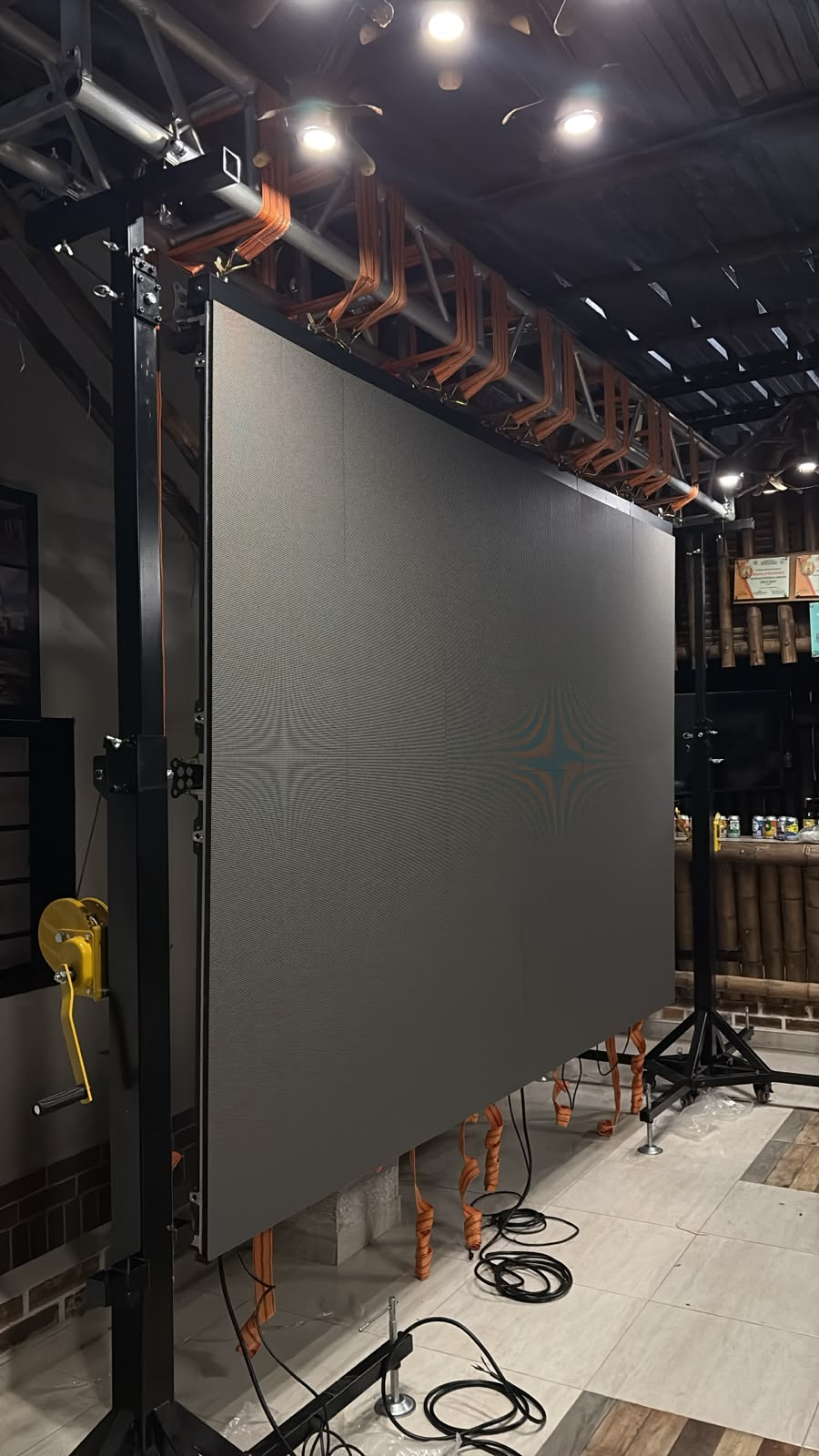
8. Front-Service Maintenance
Maintenance access is particularly important in control rooms because LED video walls are often installed close to interior walls.
A traditional rear-service design may require additional space behind the screen.
Front-service cabinets allow technicians to access compatible components from the front.
LEDLINO's P1.53 Fine Pitch LED Video Wall uses a 640 × 480 mm cabinet format and front-accessible maintenance design.
Its published product information also highlights magnetic access and slim cabinet construction.
This design is relevant to control-room installations where the display must fit within a fixed architectural space.
For buyers, important maintenance questions include:
-
Can LED modules be replaced from the front?
-
Can power supplies be serviced without removing the wall?
-
Can receiving cards be accessed safely?
-
How is a replacement module calibrated?
-
What spare parts should be stored locally?
Maintenance planning should begin during the design stage rather than after installation.
9. Heat Dissipation for Continuous Operation
Heat management is essential for indoor LED displays operating for extended periods.
LED chips, power supplies, driver ICs, and other components generate heat.
If that heat is not managed properly, the system may experience unstable operation, accelerated component aging, or changes in brightness and color consistency.
LEDLINO's COB LED Display Heat Dissipation Guide emphasizes the importance of thermal design for stable indoor video wall performance.
For control rooms, the complete thermal strategy should consider cabinet structure, airflow, wall clearance, power distribution, display brightness, and room temperature.
HVAC planning is also important.
A large display wall contributes heat to the room, and that thermal load must be considered alongside servers, workstations, lighting, and other equipment.
10. Brightness and Operator Viewing Comfort
Higher brightness is not always better in indoor control rooms.
Operators may monitor displays for long periods, making consistent and comfortable image presentation important.
LEDLINO's relevant indoor fixed display products list brightness options of approximately 600–900 nits.
The actual operating brightness should be adjusted according to ambient lighting and the content displayed.
For example, a control room with dim lighting may not require the LED wall to operate at its maximum brightness.
Important considerations include brightness consistency, contrast, readability, color temperature, and reflections.
Display settings should be planned around the operators' working environment.
A well-calibrated screen can provide strong clarity without creating unnecessary visual discomfort.
11. Wide Viewing Angle
Control rooms frequently have multiple operators seated at different positions.
A shared video wall should remain readable to staff located near the sides of the room.
A wide viewing angle helps reduce visible color and brightness changes when the screen is viewed off-axis.
LEDLINO's fine-pitch LED installation cases repeatedly highlight wide viewing angles as a feature of professional indoor displays.
However, viewing-angle performance should be tested with realistic control-room layouts.
The installation should also consider screen height, console position, viewing distance, and operator sightlines.
12. Image Uniformity and Calibration
A control-room LED wall may contain many modules.
Differences in brightness or color between modules can make the overall display appear inconsistent.
For a professional monitoring environment, this can be distracting and may reduce the clarity of certain information.
Proper calibration helps maintain consistent image appearance across the wall.
Relevant factors include LED binning, brightness adjustment, color correction, cabinet alignment, and replacement-module matching.
The buyer should ask how the supplier calibrates the display before shipment and how calibration is handled after maintenance.
This matters particularly for long-term installations where individual modules may eventually need replacement.
13. Control Room LED Display vs LCD Video Wall
LCD video walls have been used extensively in control rooms.
They offer standardized panel sizes and mature installation options.
However, LCD splicing systems normally contain visible bezels between panels.
Fine-pitch LED walls offer a more continuous display surface and greater freedom in overall screen dimensions.
| Feature | Fine Pitch LED Video Wall | LCD Video Wall |
|---|---|---|
| Panel Borders | Seamless-looking modular surface | Physical bezels between panels |
| Screen Dimensions | Flexible modular layouts | Based on standardized panels |
| Close-Viewing Detail | Depends on pixel pitch | High pixel density within panels |
| Maintenance | Depends on cabinet design | Depends on LCD mounting system |
| Initial Cost | Can be higher for fine pitch | Often economical for standard arrays |
| Brightness | Product and configuration dependent | Product dependent |
| Control Room Use | High-density seamless visualization | Established multi-panel monitoring |
LCD remains appropriate for many projects.
A fine-pitch LED video wall is particularly attractive when continuous display area, custom dimensions, and flexible visualization layouts are important.
14. Control Room LED Wall vs Projector
Projection systems can create large images but depend on reflected light.
They may be sensitive to ambient illumination, screen-surface conditions, and optical alignment.
Direct-view LED generates its own light and can provide strong image visibility in typical indoor conditions.
LED also supports modular construction and custom wall dimensions.
However, the correct technology depends on room size, operating requirements, budget, and maintenance strategy.
Control-room buyers should compare the total system rather than evaluating screen size alone.
15. LED Video Wall for Security Monitoring Centers
Security monitoring centers often require simultaneous visualization of many camera feeds.
A fine-pitch LED wall can present multiple surveillance images alongside alarm panels, maps, access-control information, and operational dashboards.
For this application, buyers should consider:
-
Number of simultaneous video streams
-
Camera feed resolutions
-
Decoder performance
-
Source switching
-
Window layout
-
System latency
-
Display readability
-
Service reliability
A large LED wall can improve shared situational awareness, but the surveillance software and decoder system must be designed to support the desired number of sources.
16. LED Video Wall for Traffic Control Centers
Traffic management centers use visual information to monitor roads, intersections, transportation networks, and incidents.
Typical sources include road cameras, geographic maps, incident alerts, traffic flow dashboards, and operational communications.
A large seamless LED wall can combine these elements into one shared visualization environment.
Fine pixel pitch can help improve the readability of detailed maps and small labels.
For traffic monitoring, the project should also consider data update frequency, source latency, switching speed, and high-availability requirements.
17. LED Video Wall for Power Dispatch Centers
Power dispatch centers may display network status, equipment information, energy distribution dashboards, alarms, and system diagrams.
Visual reliability is important because operators need to understand changing system conditions.
A fine-pitch LED wall can support a continuous display of large network diagrams and status information.
For this application, system designers should focus on readable symbols, clear alarm presentation, high reliability, and integration with the approved operational software.
The display system should not be treated as the only method of accessing mission-critical information.
18. LED Video Wall for Industrial Control Rooms
Industrial facilities often use control rooms to observe production equipment, plant status, process conditions, and operational performance.
LED video walls can support SCADA visualization, process diagrams, camera feeds, and plant dashboards.
For factories and process-control facilities, display selection should consider continuous operation, environmental conditions, maintenance, and integration with existing control systems.
The video wall should provide clear information without introducing unnecessary complexity into the operational workflow.
19. LED Video Wall for Emergency Command Centers
Emergency command centers frequently require a shared operational picture.
The display may show maps, video feeds, resource allocation, communication updates, weather information, and incident status.
A large LED wall can support collaborative decision-making by allowing teams to view relevant information together.
For these applications, availability, source integrity, readable layouts, and contingency procedures are critical.
System-level redundancy and backup access should be considered according to the operational risk.
20. Real LEDLINO Case: P1.5 Fine Pitch Indoor LED Display
LEDLINO completed an indoor P1.5 fine-pitch LED display installation for a modern research and presentation center.
The published project highlights ultra-high-definition images, close-viewing clarity, seamless presentation, high color consistency, smooth playback, and customized fixed installation.
The installation was developed for research communication, presentations, conferences, and digital visualization.
Although this is not presented as a dedicated 24/7 security control-room deployment, it demonstrates relevant fine-pitch display capabilities for professional information-rich environments.
Its P1.5 pixel pitch is suitable for projects where clear data and close-viewing performance are priorities.
Project Reference: LEDLINO P1.5 Research and Presentation Center Installation
21. Real LEDLINO Case: P1.86 COB Indoor LED Wall
LEDLINO has also published a P1.86 COB indoor LED display installation for a modern conference room.
The installation emphasizes seamless imagery, fine-pitch clarity, high contrast, wide viewing angle, clean wall integration, and convenient maintenance.
The project includes installation structure and video playback documentation.
Although its primary application is a conference room, the COB technology and indoor fixed-installation design are relevant to the evaluation of premium command-center and control-room video walls.
Project Reference: LEDLINO P1.86 COB Indoor LED Display Project
22. How Much Does an LED Display for Control Room Cost?
The price of a control-room LED display depends on the complete project design.
A simple price-per-square-meter comparison is rarely sufficient.
Major cost factors include:
Pixel Pitch
Smaller pixel pitch increases LED density and generally increases the cost of the display.
Display Size
A larger screen needs more modules, cabinets, structural materials, power distribution, and processing capacity.
COB, SMD, or GOB Technology
Different packaging methods affect manufacturing complexity, surface protection, and maintenance.
Video Processor
A control room displaying many sources may require more sophisticated processing and management equipment.
High Availability
Optional redundant power, backup processing, monitoring, and spare components may increase project cost.
Installation Structure
Wall mounting, embedded installation, custom frames, and architectural integration affect the final budget.
Maintenance
Front-access design, spare parts, calibration, and service arrangements contribute to long-term cost.
LEDLINO's Indoor LED Video Wall Price Guide explains why pixel pitch, cabinet design, resolution, packaging technology, and control-system requirements should all be evaluated together.
For professional projects, the best comparison is total cost of ownership rather than the initial price alone.
23. Control Room Video Wall Design Checklist
Before selecting a control-room LED display, the project team should define the operational requirements.
Display Requirements
Determine the required wall size, native resolution, pixel pitch, brightness, and viewing distance.
Source Requirements
Identify the number and type of video and data sources that must be displayed simultaneously.
Operational Requirements
Define daily operating hours, required availability, failover expectations, and maintenance procedures.
Installation Requirements
Confirm wall structure, cabinet depth, ventilation, power supply, and access for servicing.
Integration Requirements
Verify compatibility with the video processor, management software, camera systems, and operational data platforms.
Support Requirements
Establish warranty coverage, spare parts, technical documentation, and service response expectations.
These steps help prevent specification mismatches and reduce the risk of costly changes after installation.
24. How to Choose a Reliable Control Room LED Display Manufacturer
A professional control-room supplier should understand both display hardware and project-specific operational needs.
Important selection criteria include product range, pixel-pitch availability, manufacturing consistency, cabinet design, thermal performance, maintenance access, quality control, and technical support.
Buyers should request clear product specifications and evidence of relevant installations.
They should also confirm whether the manufacturer can support special requirements such as custom screen dimensions, controller integration, long-term maintenance planning, and high-availability configurations.
Lino Visino offers indoor fine-pitch LED display solutions with multiple pitch options and front-service cabinet designs.
Its published product and installation information covers fixed indoor video walls, COB fine-pitch displays, research-center installations, conference rooms, and command-center-related applications.
For control-room projects, the final solution should be engineered according to the required operating conditions rather than selected from a generic product specification alone.
Frequently Asked Questions
What Is the Best LED Display for a Control Room?
The best solution is generally a fine-pitch indoor LED video wall selected according to viewing distance, native resolution, information density, operating hours, maintenance access, and required system availability.
What Pixel Pitch Is Recommended for Control Rooms?
P1.25, P1.53, and P1.86 are common options for close-viewing professional environments. P2 and P2.5 may be suitable for larger rooms with longer viewing distances or less detailed content.
Can LED Video Walls Operate 24/7?
Some professional LED video wall systems are designed for continuous-duty environments. Buyers should confirm the selected product's continuous-operation rating and evaluate thermal management, power reliability, monitoring, and service arrangements.
Is COB Better Than SMD for Control Rooms?
COB can offer benefits in surface protection and premium fine-pitch applications. However, high-quality SMD and GOB products can also be suitable. The correct choice depends on project requirements and total system quality.
Why Is Front Maintenance Important?
Front maintenance allows compatible components to be serviced from the display side, reducing the need for additional space behind the screen.
Does a 4K Input Mean the LED Wall Is Native 4K?
No. Native resolution depends on the physical number of LED pixels. A video processor may accept and scale 4K content even when the wall itself has a lower native resolution.
Can an LED Wall Display Multiple CCTV Cameras?
Yes, when used with suitable video management, decoding, processing, and signal distribution equipment. The maximum number of simultaneous windows depends on the complete system architecture.
Are Redundant Power Supplies Standard?
Not necessarily. Redundancy is product- and system-specific and should be confirmed with the manufacturer or integrator during project design.
What Brightness Is Suitable for a Control Room?
Indoor control-room displays should provide sufficient brightness for readable content without causing unnecessary glare or discomfort. LEDLINO lists approximately 600–900 nits for relevant indoor models, with operating levels adjusted to the room.
How Much Does a Control Room LED Video Wall Cost?
Cost depends on pixel pitch, screen dimensions, technology, processor requirements, installation, high-availability features, and long-term service arrangements.
Conclusion
A professional LED display for control room applications is more than a large digital screen.
It is a central visualization platform that can help operators monitor complex systems, understand real-time information, and coordinate operational decisions.
Fine-pitch LED technology provides important advantages for these environments, including seamless display construction, high pixel density, flexible screen dimensions, and clear multi-source visualization.
Lino Visino's indoor LED product range includes P1.25, P1.53, P1.86, P2, and P2.5 configurations, together with COB and SMD/GOB options and front-service cabinet designs for different project requirements.
However, the most successful control-room installations are not defined by screen specifications alone.
Reliability, controller architecture, source management, heat dissipation, service access, operator comfort, and total operating cost are equally important.
For security monitoring centers, industrial operations facilities, transportation control rooms, power dispatch centers, and emergency command environments, the right solution should combine suitable LED hardware with a professionally engineered visualization system.
Looking for a reliable LED display for your control room?
Contact Lino Visino with your room dimensions, viewing distance, desired resolution, monitoring sources, and operational requirements to discuss a customized fine-pitch LED video wall solution.
Explore Related Products and Projects:
LEDLINO P1.53 Front-Service Indoor LED Video Wall
LEDLINO Indoor Fixed P1.86 / P2 LED Video Wall