



LED Floor Tiles for Events: How to Create Interactive and Immersive Event Spaces
LED Floor Tiles for Events: Why They Are Becoming a Major Event Technology
Events are increasingly designed as experiences rather than simple gatherings.
Whether it is a wedding, concert, product launch, exhibition, brand activation, nightclub event, or sports experience, organizers are under pressure to create environments that are visually memorable, highly shareable, and different from traditional stage setups.
This is where LED floor tiles for events offer a major advantage.
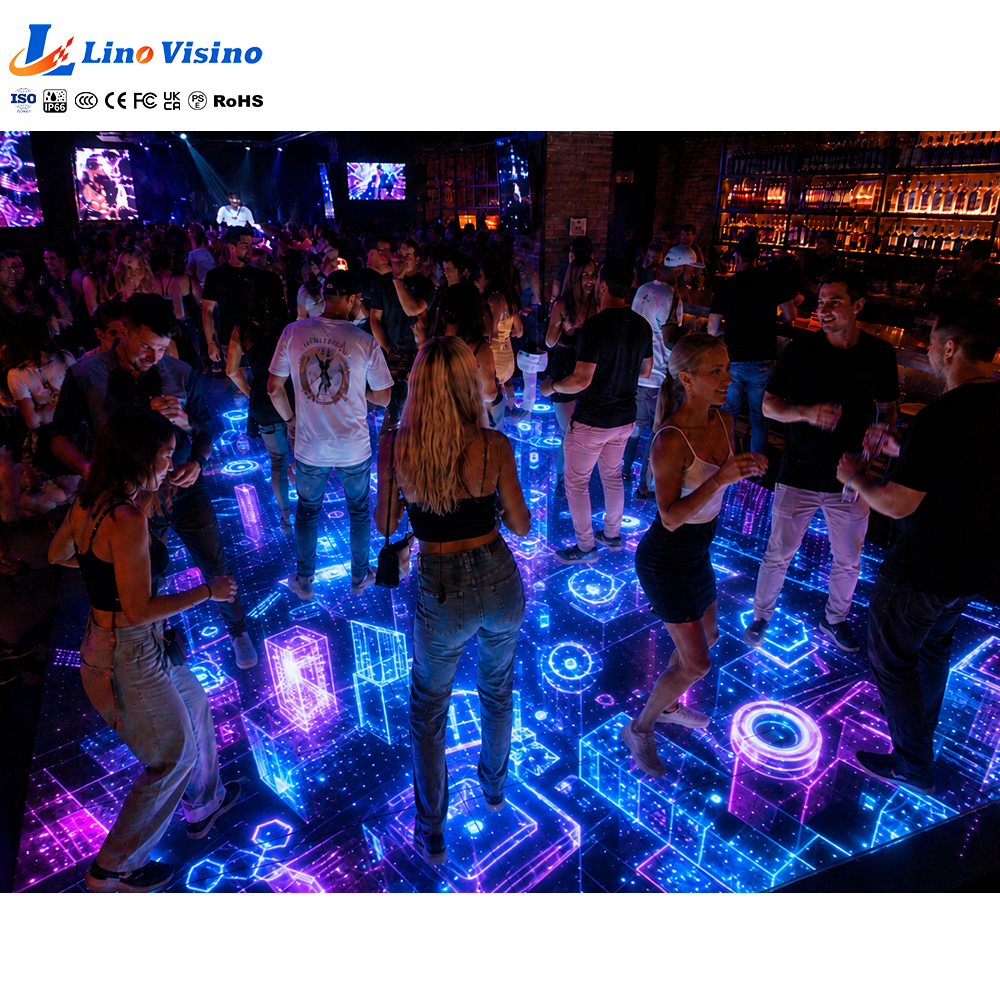
Instead of treating the floor as a passive surface, LED floor tiles turn it into an active display capable of showing animation, video, branding, interactive effects, countdowns, event themes, sports graphics, and immersive digital environments.
LEDLINO’s 50㎡ P3.91 interactive floor-screen project demonstrates this concept clearly: the floor display was integrated with a curved Indoor Led Video Wall to create one continuous visual environment for an immersive experience space.
For event designers, this means the ground itself becomes part of the storytelling.
What Are LED Floor Tiles?
LED floor tiles are load-bearing LED display modules designed specifically for horizontal installation.
Unlike a conventional led wall, they must support people walking, dancing, standing, and sometimes moving equipment across the screen surface.
This requires a different mechanical structure.
A professional LED floor tile system usually combines:
- Reinforced cabinet structure
- Protective top layer
- Anti-slip treatment
- Wear resistance
- Stable led modules
- Power and signal distribution
- High refresh video playback
- Interactive sensing when required
LEDLINO’s floor-screen content describes these products as display systems optimized specifically for ground use, where they must handle high-frequency foot traffic and pressure while maintaining visual performance.
Why LED Floor Tiles Are Ideal for Events
Traditional event flooring can support decoration, lighting, or printed graphics, but once installed, the appearance is largely fixed.
LED floor tiles are programmable.
The same floor can display one visual for a product launch, another for a wedding, and a completely different experience for a sports or exhibition project.
That makes them especially valuable for event companies that reuse hardware across many projects.
Typical event content can include:
- Brand logos
- Product animations
- Wedding names and dates
- Music-reactive visuals
- Sports graphics
- Water-ripple effects
- Interactive footprints
- Countdown animations
- Digital landscapes
- Sponsor content
The ability to change the content without changing the physical floor improves both creative flexibility and long-term equipment value.
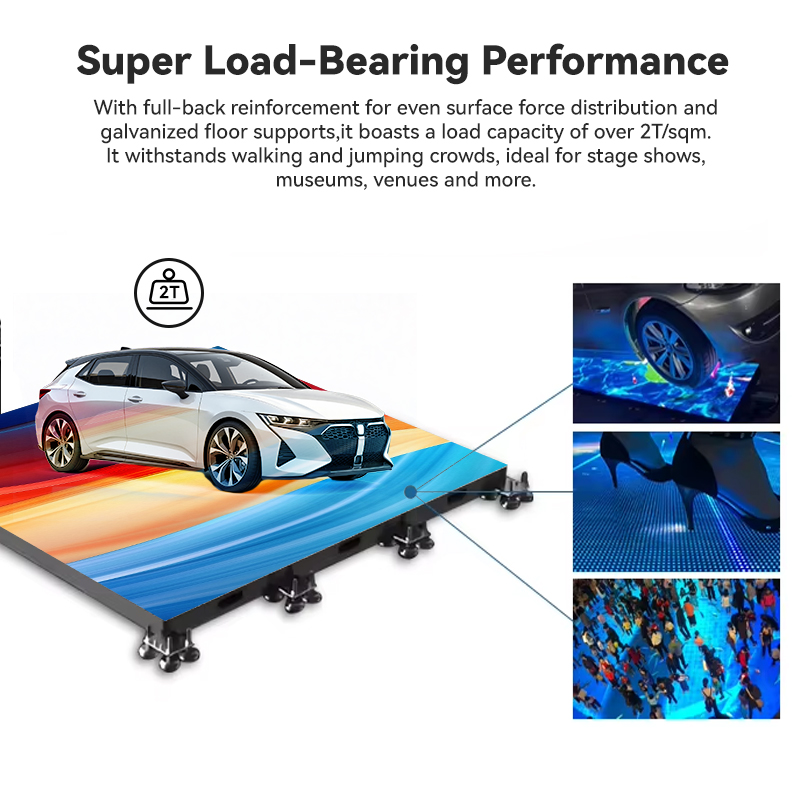
Key Advantage 1: Strong Load-Bearing Performance
Load-bearing capability is one of the most important differences between an LED floor tile and a standard LED panel.
People may walk, dance, jump, or stand on the screen during an event, so the structure must support repeated pressure.
LEDLINO’s floor tile project content repeatedly highlights strong load-bearing structure as a core requirement, especially in immersive sports and commercial entertainment spaces with frequent visitor movement.
This makes LED floor tiles suitable for:
- Wedding Dance Floors
- Event stages
- Trade-show interaction zones
- Mall activations
- Sports experiences
- Nightclubs
- Public entertainment spaces
For buyers, load rating should always be confirmed before ordering because the expected traffic can vary significantly between projects.
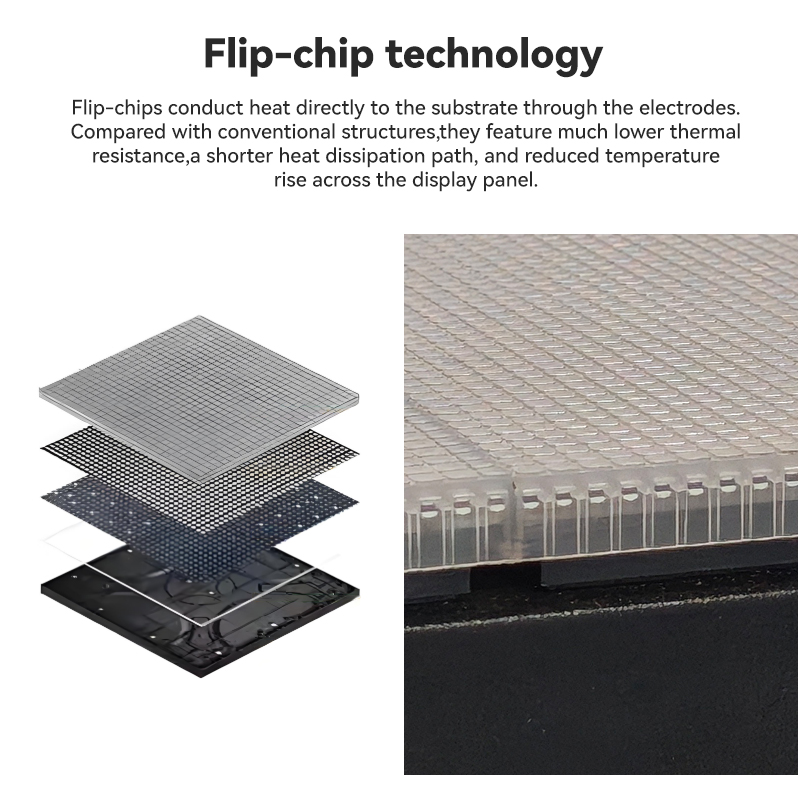
Key Advantage 2: Anti-Slip and Wear-Resistant Surface
Safety matters just as much as visual performance.
An event floor must remain stable under shoes, high heels, equipment cases, cleaning, and repeated foot traffic.
LEDLINO’s 50㎡ P3.91 project specifically lists an anti-slip and wear-resistant surface among the key product features.
Its 146㎡ P3.91 sports-experience installation also emphasizes anti-slip construction and stable floor use in a high-traffic commercial environment.
For event organizers, this is essential because visually impressive flooring must still allow guests to move confidently.
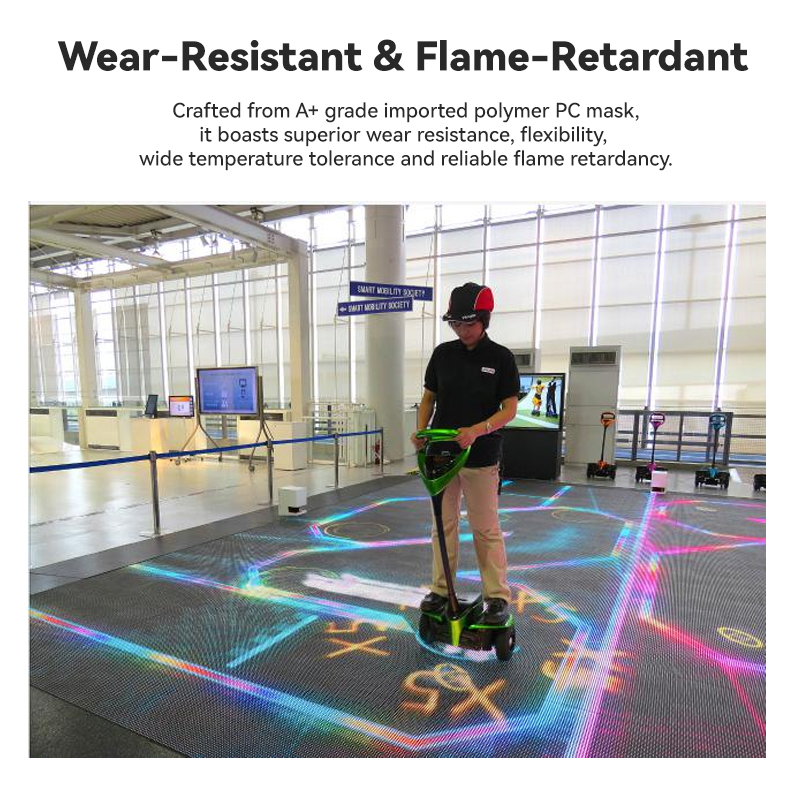
Key Advantage 3: Interactive Sensing
LED floor tiles can do much more than play video.
When combined with touch, pressure, infrared, or motion sensing, the screen can respond to users in real time.
This opens the door to effects such as:
- Footstep tracking
- Water ripples
- Light trails
- Interactive games
- Particle bursts
- Sports challenges
- Multi-user responses
- Brand engagement experiences
LEDLINO’s event-related product listings include P2.5–P3.91 indoor Interactive Led Floor Screens with multi-user synchronous response and touch/pressure sensing for gaming.
For brand events and exhibitions, interactivity can increase visitor participation and dwell time because the audience is no longer only watching the screen—they become part of the content.
Key Advantage 4: High Refresh Rate for Camera-Friendly Events
Modern events are heavily recorded.
Guests use smartphones, photographers shoot professionally, concerts are livestreamed, and brands create social-media content from the venue.
If the LED floor has a low refresh rate, cameras may capture flicker or banding.
LEDLINO’s 50㎡ floor-screen project lists smooth playback with high refresh rate as one of the main features.
This is especially important for:
- Weddings
- Concerts
- Product launches
- Livestreams
- Press events
- Corporate conferences
A camera-friendly LED floor helps ensure that the event looks as good online as it does in person.
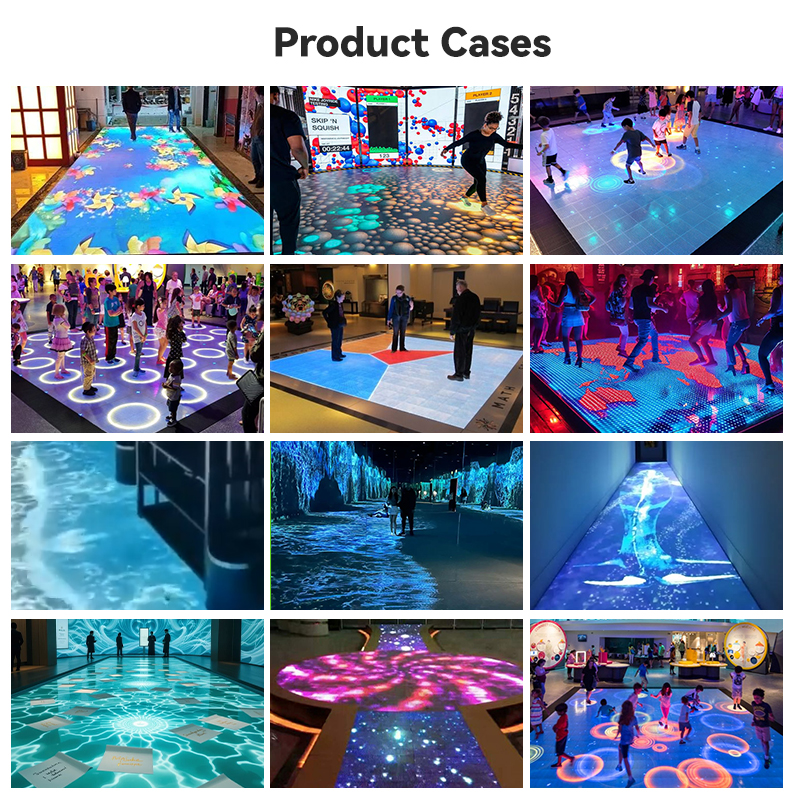
Key Advantage 5: Floor-to-Wall Visual Integration
One of the strongest trends in event design is multi-surface content.
Instead of using separate visuals on the wall and floor, designers can coordinate the LED floor with a video wall or curved screen.
LEDLINO’s 50㎡ installation combines a P3.91 interactive floor with a curved led video wall, while its 146㎡ sports project combines a large floor display with a vertical screen to extend the visual environment across both surfaces.
This allows content to appear as if it moves through the entire space.
For example:
- Water can flow from the wall onto the floor
- Products can appear to move toward the audience
- Sports graphics can continue across surfaces
- Digital landscapes can surround visitors
- Brand content can create a fully immersive environment
For premium events, this greatly increases visual impact.