




Transparent LED Display Manufacturer: How to Choose a Reliable Factory for Retail, Glass and Commercial Projects
Transparent led display manufacturer: Why Factory Selection Matters
The keyword transparent led display manufacturer has strong B2B buying intent. A visitor searching this phrase usually already understands transparent LED technology and is moving toward supplier comparison, quotation, customization or project planning.
Unlike a conventional LED wall, a Transparent Led Display must balance two different requirements at the same time: it has to show bright, attractive digital content while preserving visibility, daylight and architectural openness behind the screen.
That balance depends on product design, transparency ratio, pixel pitch, brightness, cabinet or film structure, control system, installation method and manufacturing quality. This is why choosing the right factory matters.
LEDLINO presents Lino Visino as an led display manufacturer with more than 10 years of experience and a portfolio centered on transparent, holographic, interactive, COB/fine-pitch and customized LED technologies. Its website also highlights OEM/ODM, warranty, accessories, pre-sales service and after-sales service as part of its supplier proposition.
What Is a Transparent Led Display?
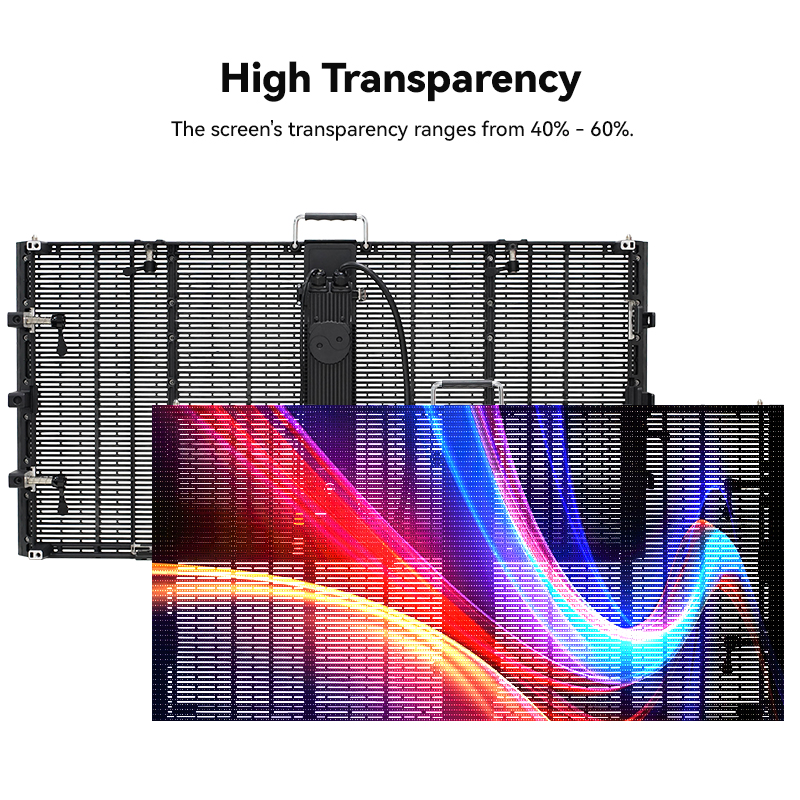
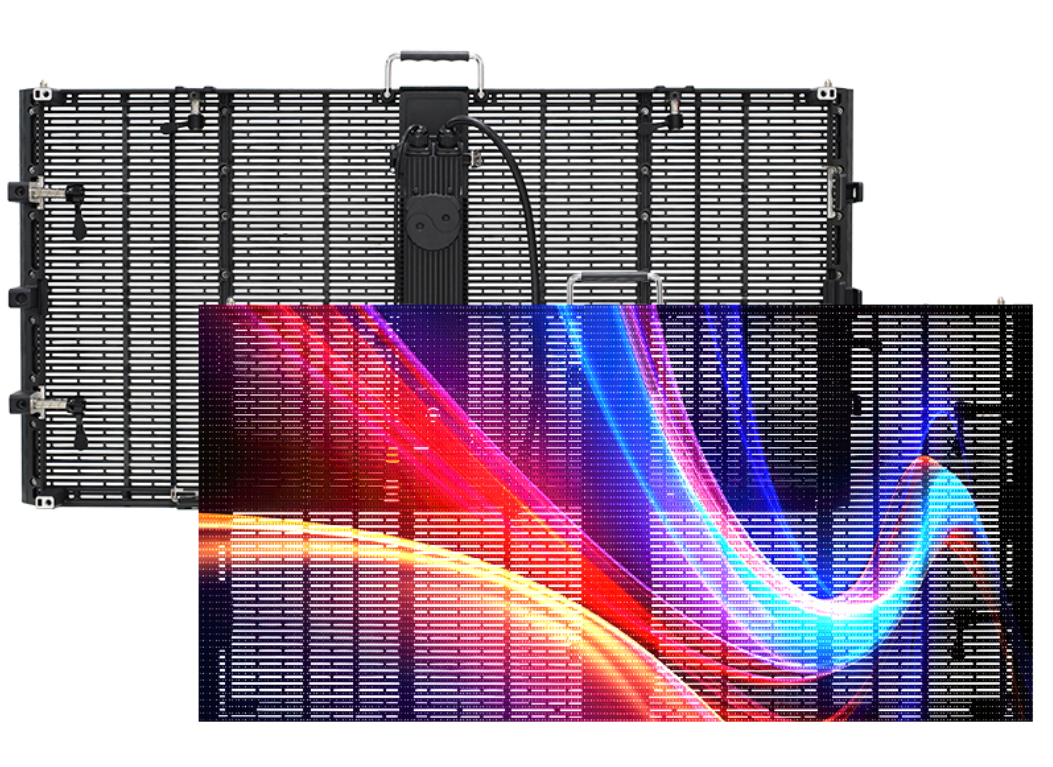
A Transparent Led Display is a digital LED screen designed to show full-color content while still allowing viewers to see through the display structure.
This makes it different from a conventional solid LED cabinet. Instead of creating a completely opaque digital wall, transparent LED technology leaves open space between LED elements or uses ultra-thin transparent structures so light and background visibility can pass through.
This combination is valuable for commercial architecture because the screen can become part of the glass rather than hiding it.
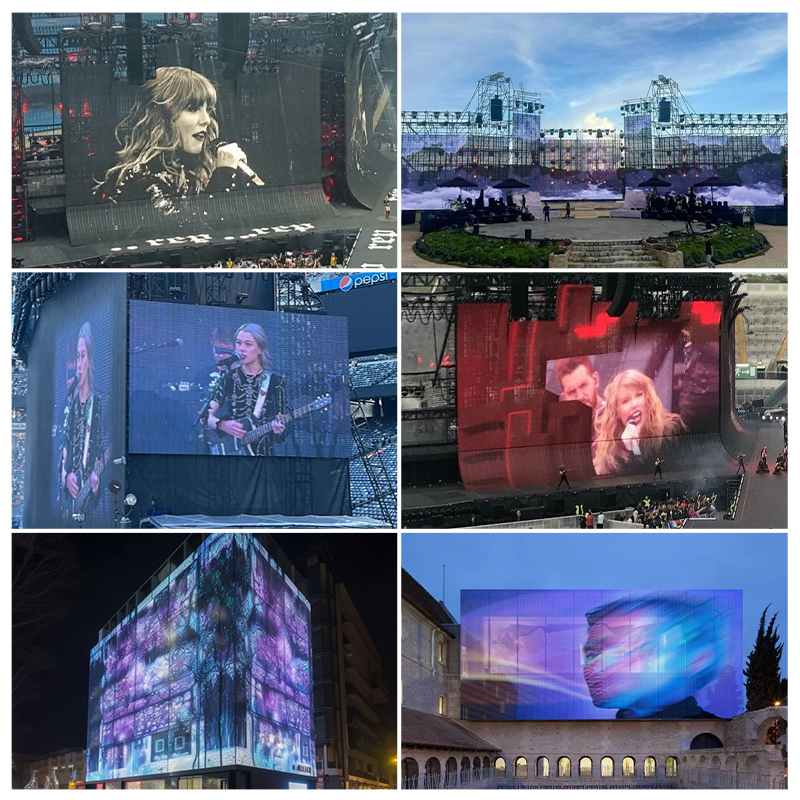
LEDLINO’s transparent display content describes transparent LED screens as high-transparency displays that minimize the effect on natural lighting and can be installed on glass curtain walls with relatively little impact on the original building structure.
Why Transparent LED Displays Are Growing in Commercial Projects
Retail and architectural spaces increasingly need digital advertising without sacrificing open design.
A traditional solid LED wall may provide strong image performance but can completely block a shop window or building façade. A transparent LED display allows businesses to communicate digitally while maintaining sightlines into the store or building.
This creates a strong fit for:
- Luxury retail windows
- Car showrooms
- Shopping mall entrances
- Glass façades
- Airports
- Exhibition spaces
- Restaurants
- Flagship stores
- Corporate buildings
- Commercial atriums
LEDLINO’s transparent LED display supplier pages specifically position transparent products for retail, advertising, events and architectural environments.
Key Factor 1: Transparency Rate
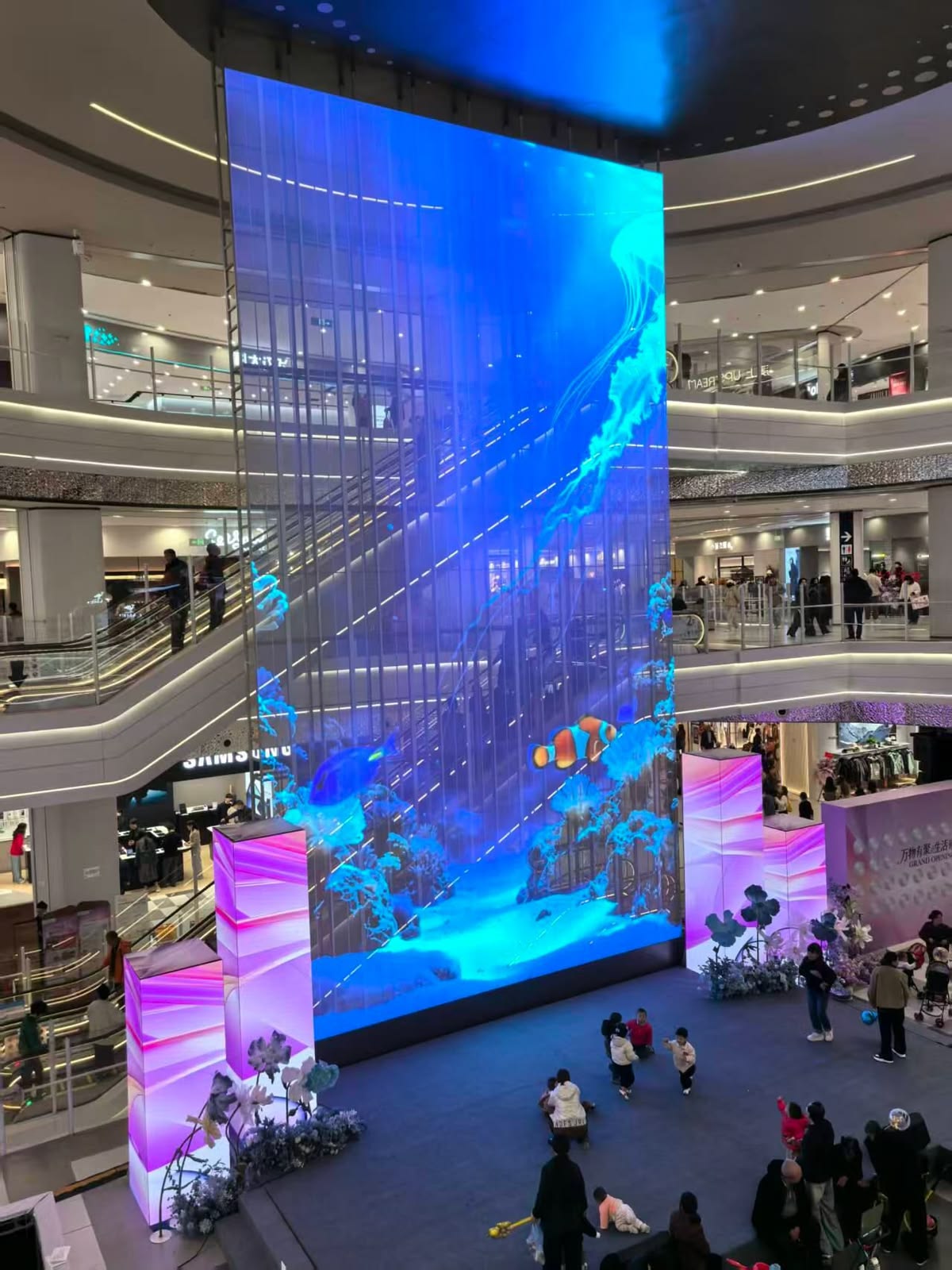
Transparency is one of the most important specifications buyers should compare.
A higher transparency ratio means more of the environment behind the screen remains visible. This helps maintain natural light and architectural openness.
However, transparency should not be selected in isolation. Increasing transparency may reduce LED density or image fullness depending on product design. The best solution balances transparency, viewing distance, brightness, pixel pitch and content.
LEDLINO states that some indoor transparent LED screen designs can achieve approximately 60% to 90% transparency.
For shop windows and glass curtain walls, this balance is critical because the screen should attract attention without making the space feel closed.
Key Factor 2: Pixel Pitch and Viewing Distance
Pixel pitch affects image clarity, transparency, viewing distance and price.
Smaller pixel pitch usually improves image detail but requires denser LED placement. Larger pitch can improve openness and may be more suitable for longer viewing distances.
The correct pitch depends on:
- Viewer distance
- Glass size
- Screen dimensions
- Advertising content
- Transparency requirement
- Budget
- Indoor or outdoor installation
LEDLINO’s transparent product portfolio includes products such as P3.91 flexible transparent screens, P6/P8 ultra-thin flexible crystal mesh panels and P10 transparent film solutions, demonstrating that different pitch structures are designed for different use cases.
A good transparent LED display manufacturer should calculate the appropriate pitch rather than simply selling the densest or cheapest option.
Key Factor 3: Lightweight and Ultra-Thin Structure
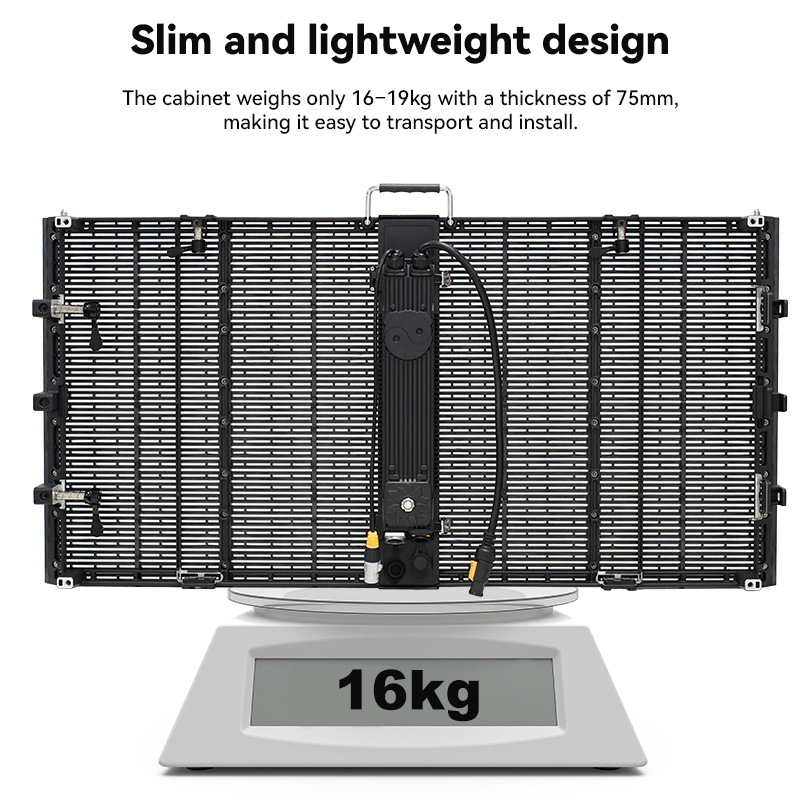
Transparent displays are often attached to glass or integrated into existing architecture, so weight matters.
Heavy equipment can increase structural complexity, installation time and building modification requirements.
LEDLINO’s transparent display content highlights ultra-thin, lightweight designs and notes that some products can be fixed directly onto glass curtain walls without requiring major changes to the original building structure.
For retailers and architects, this can reduce installation disruption and preserve the visual character of the space.
Key Factor 4: Brightness and Image Visibility
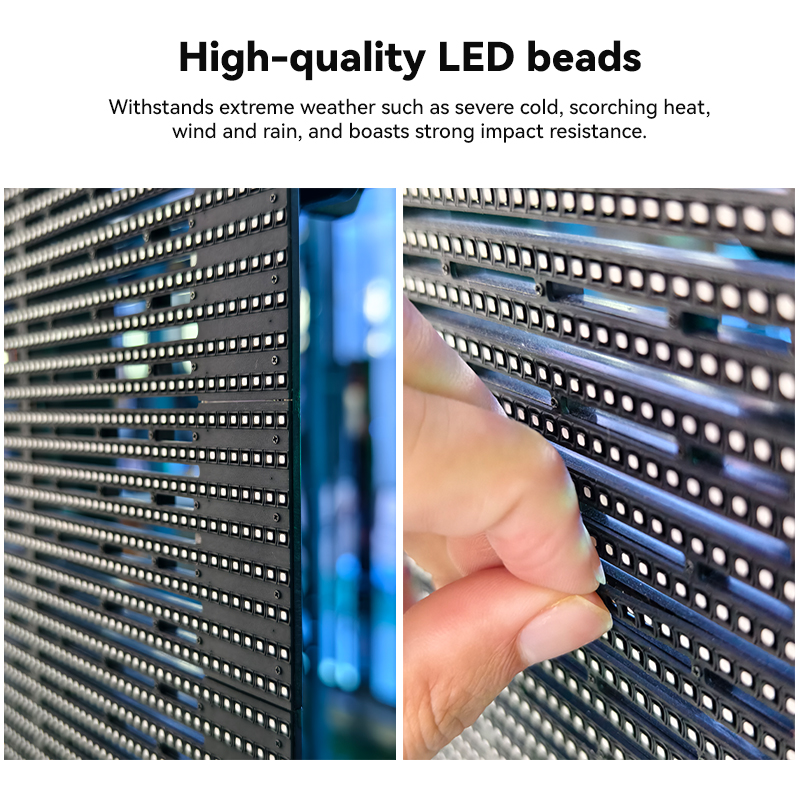
A transparent screen still needs to compete with ambient light.
Retail windows often face strong indoor lighting, daylight or direct sunlight. Airports and malls may have bright environments. Outdoor glass façades may require even stronger brightness.
A professional manufacturer should recommend brightness based on actual installation conditions rather than applying the same specification to every project.
The correct brightness should ensure:
- Clear advertising content
- Strong color visibility
- Comfortable nighttime viewing
- Reasonable energy consumption
- Good image contrast
LEDLINO describes its transparent LED solutions as providing bright colors and high-definition visual performance while maintaining transparency.
Typical Applications
Retail Windows
Transparent LED screens allow brands to display video advertising while customers can still see the merchandise behind the glass.
Shopping Malls
Screens can be installed on atrium glass, storefronts, corridors and façades to create large digital advertising surfaces without visually closing the building.
Airports and Railway Stations
Transparent LED technology can combine information and advertising with modern architectural spaces.
Exhibition Halls
Displays can create floating visual effects while preserving the openness of exhibition spaces.
Corporate and Art Buildings
Architects can integrate digital media into glass façades without using traditional opaque signage.
LEDLINO lists retail windows, commercial corridors, art buildings, exhibition halls and glass curtain walls among its transparent display scenarios.